
The Flapper
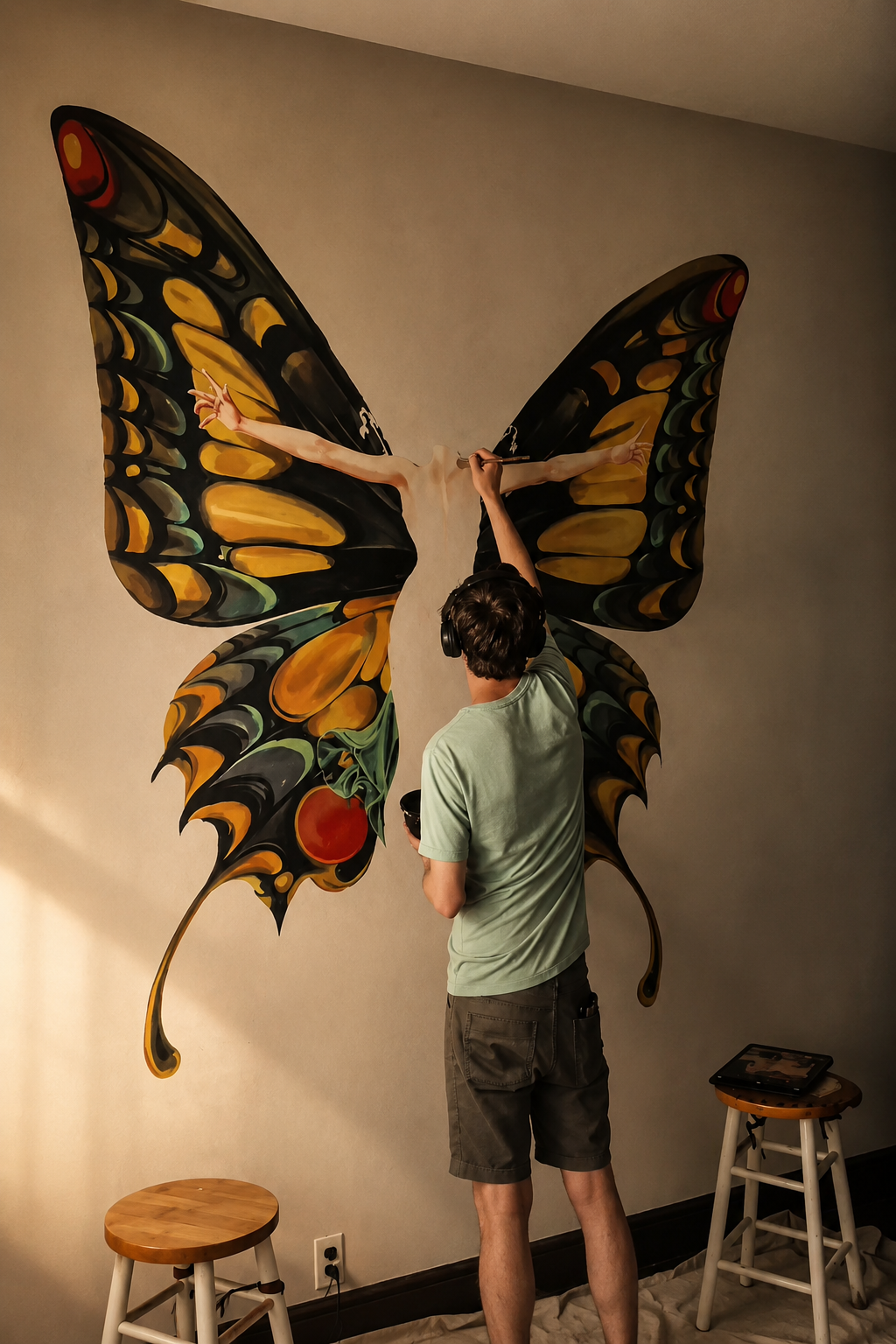
Indianapolis, IN · Interior · 2021 · Painted inside a former Woodruff Place mansion during the first year of the pandemic, The Flapper was the mural that turned painting back into the center of my life. Adapted from F. X. Leyendecker’s 1922 TIME cover, it took up a twelve-foot apartment wall and brought a figure from the 1920s back into a room built in the same decade.
Site: Eric’s apartment, Woodruff PlaceSurface: Interior plasterDimensions: 6’ × 6’Medium: Golden Paintworks interior acrylicStudio role: Concept, adaptation, layout, paintingYear: 2021My apartment was uniquely suited for this project. Woodruff Place is a historic Indianapolis neighborhood of fountains, statuary, and wide esplanades, and my unit was one of several carved out of a 19th-century mansion that had been divided in the 1920s. The rooms still held the proportions of the original house, ceilings near twelve feet. The walls felt less like a rental and more like a place that had been waiting to be used.
Leyendecker’s Flapper was the right image for that wall. I had been drawn to Art Nouveau, early 20th-century illustration, and the visual language of a more decorative age for a long time, and the original cover offered everything I wanted in one frame — elegance, period reference, figure, pattern, graphic clarity. Bringing it back as a mural, inside a building from the same decade, felt less like reproduction than like returning her to a room she might once have stood in.
While the mural was still drying, a short process video went up on TikTok and hit around half a million views, bringing thousands of new followers overnight. Commissions started arriving before the painting was finished — private residences, larger interior work, Art Nouveau-inflected projects, reference trips. The mural became proof, to me, that this could be the practice.
The apartment was repainted after I moved out, and the mural is gone. That loss taught me something about the work itself: a mural can transform a room completely, and it can still be undone by a new owner, a renovation, or simply time. The painting belongs to the wall, and the wall belongs to someone else. The Flapper doesn’t exist anymore, but every project since has been connected to the one before it, each piece born out of the last.