SILK LOFTS

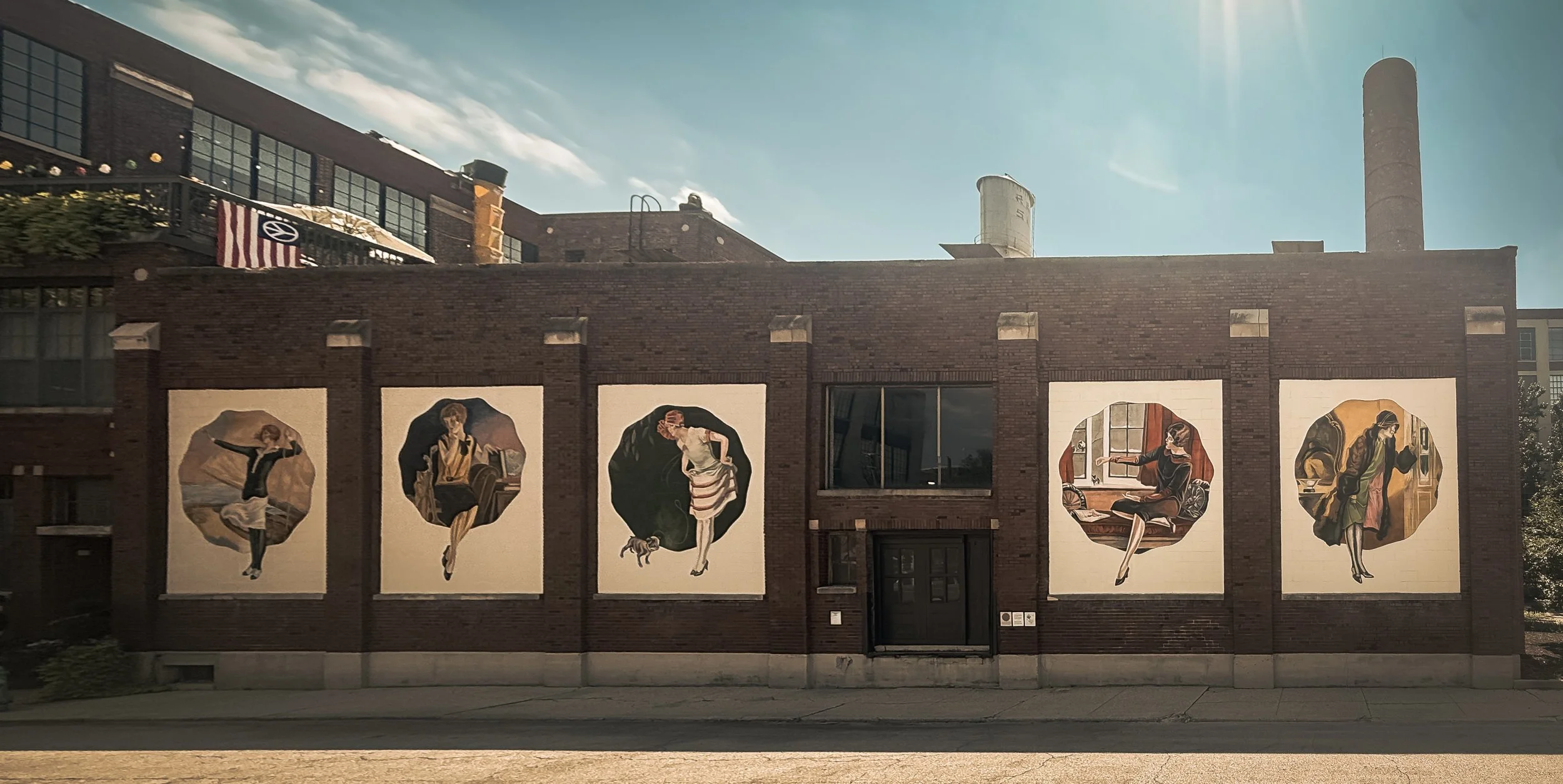
Five advertisements from the 1920s, remade at architectural scale as murals at Silk Lofts in Indianapolis
Indianapolis, Indiana
Exterior mural installation
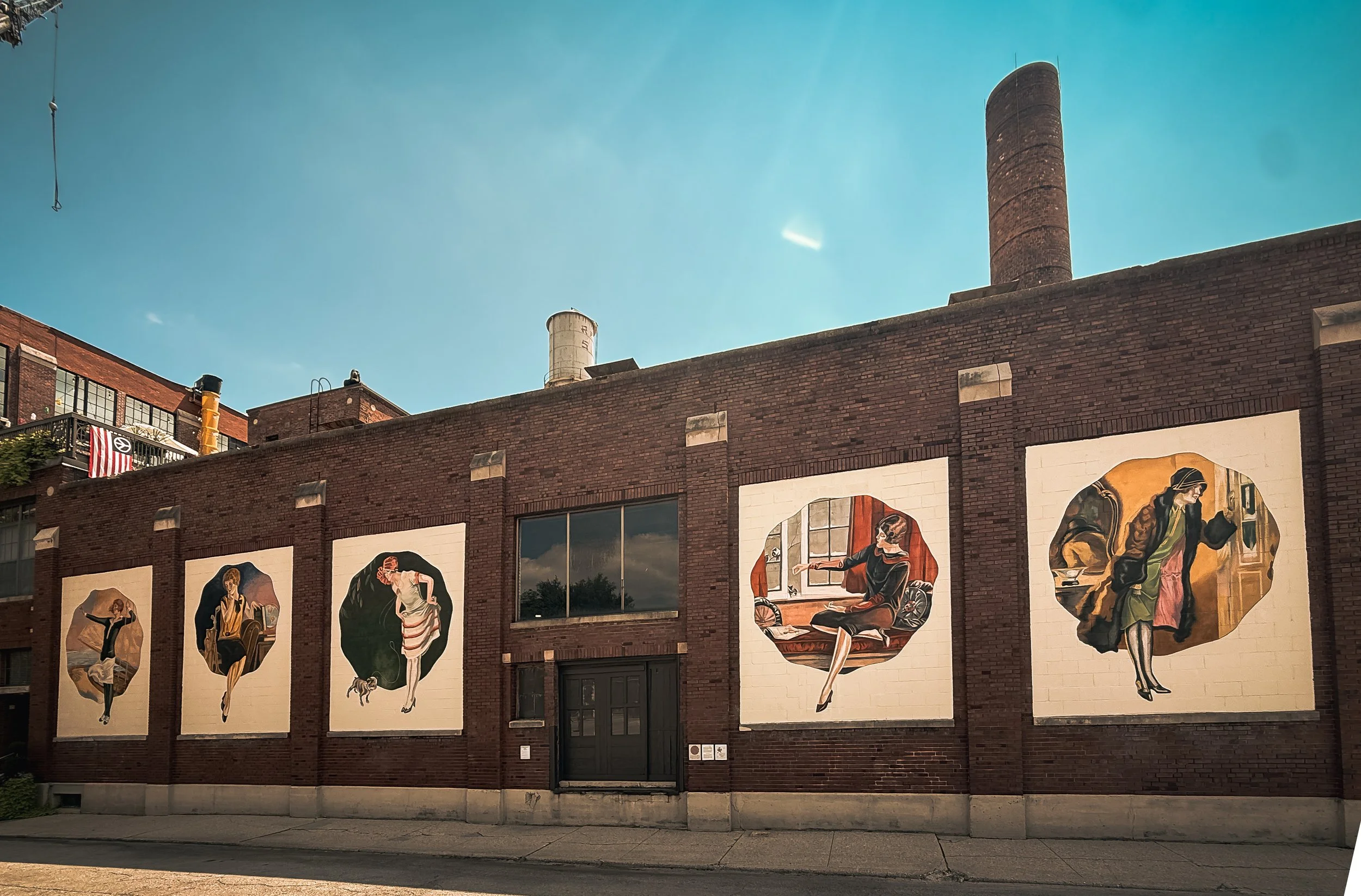
Five painted façade panels
2026
Real Silk Hosiery Mills
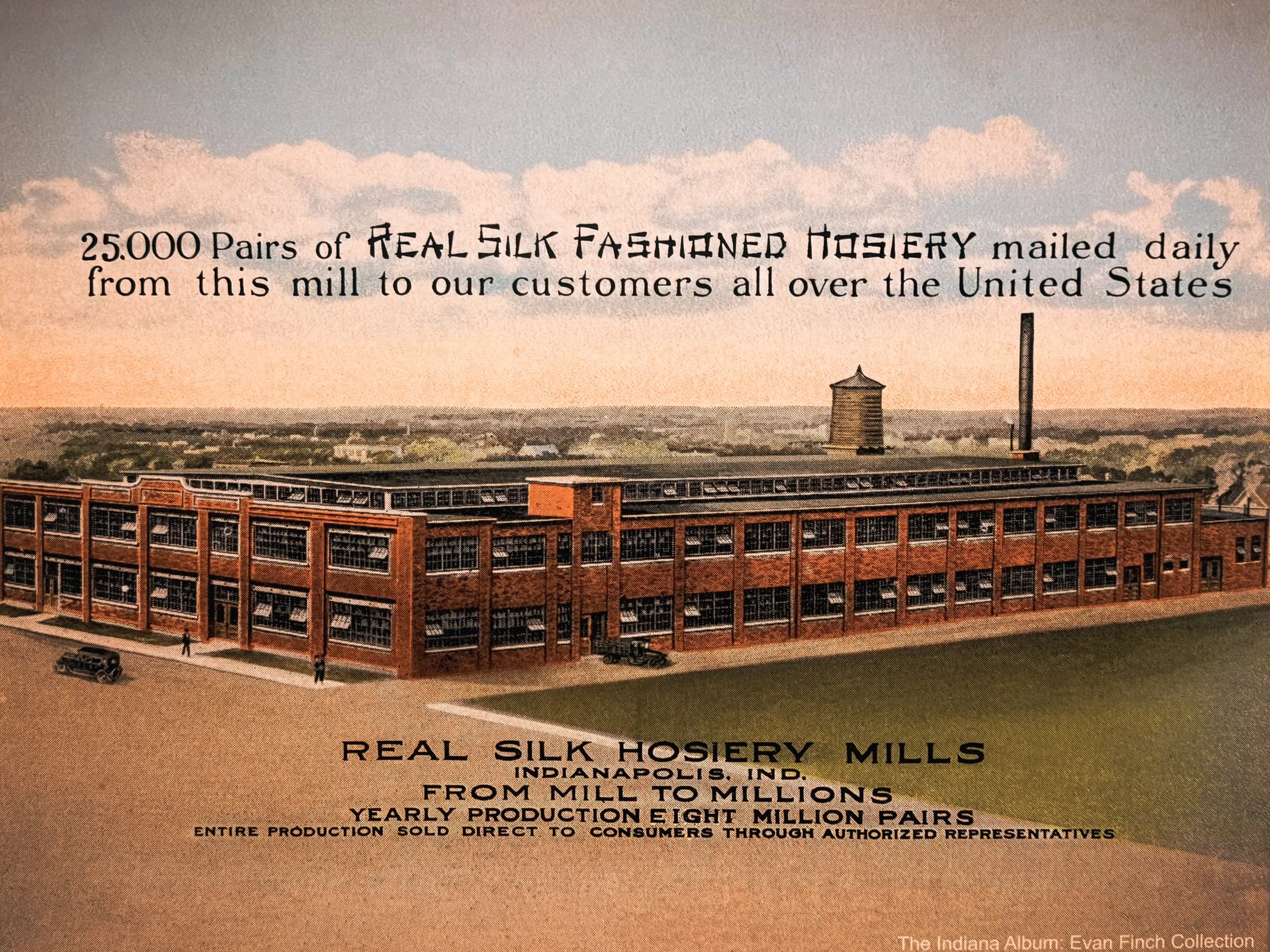
Real Silk Hosiery Mills began operating in 1922 and grew into a six-acre manufacturing complex—one of the country’s largest producers of women’s silk hosiery.
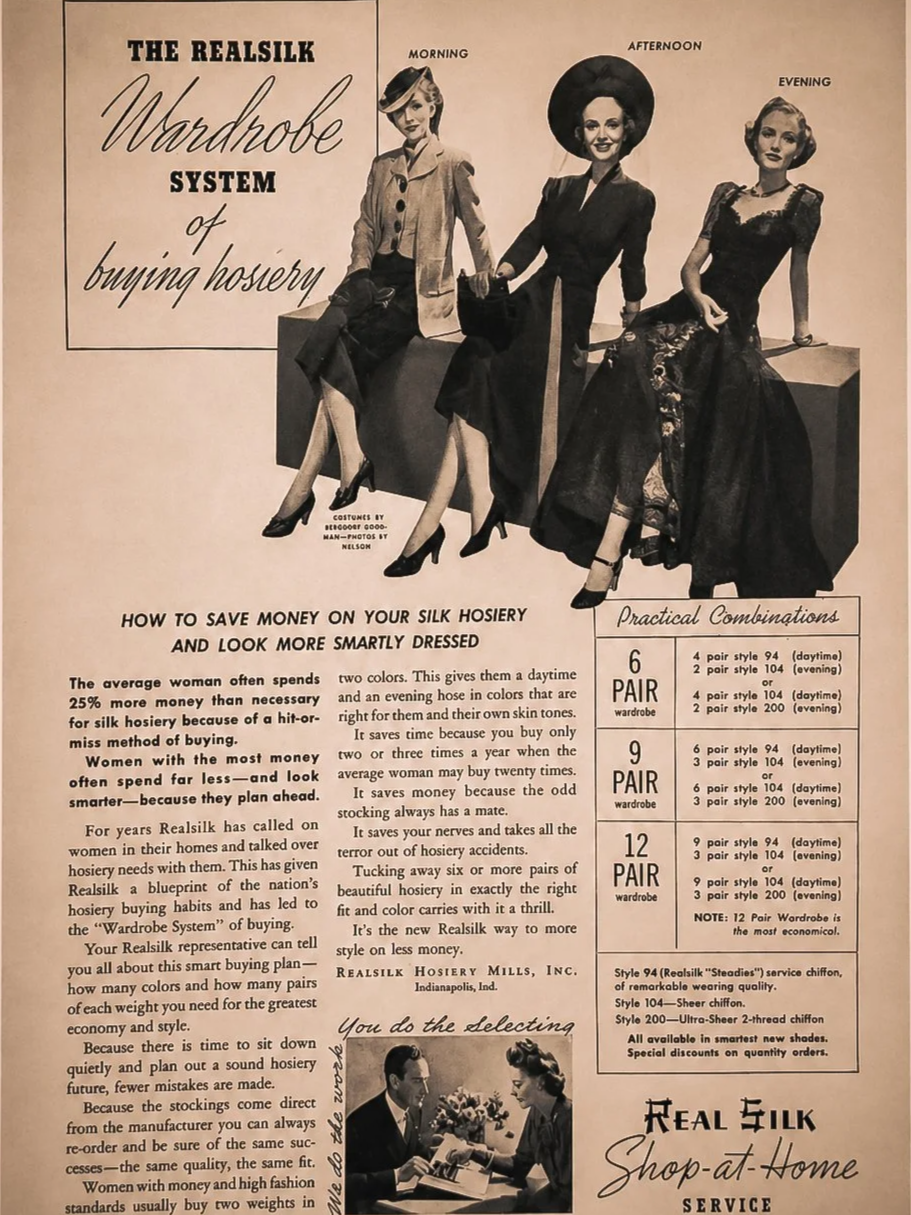
At its peak, the company produced more than twelve million pairs annually. Manufacturing ended in the 1950s; after serving as the Printing Arts Center, the complex was converted to residential use and became Real Silk Lofts.
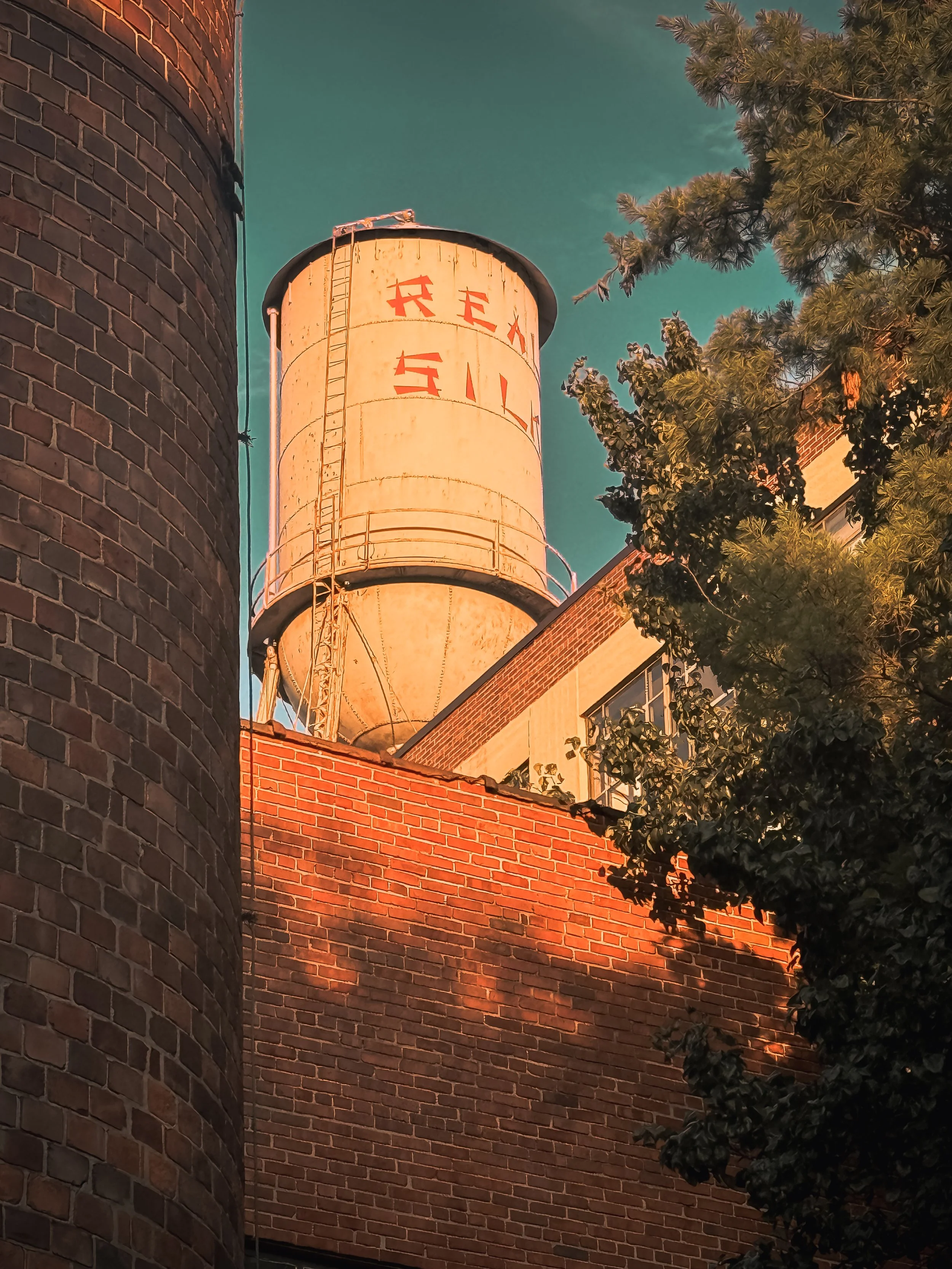
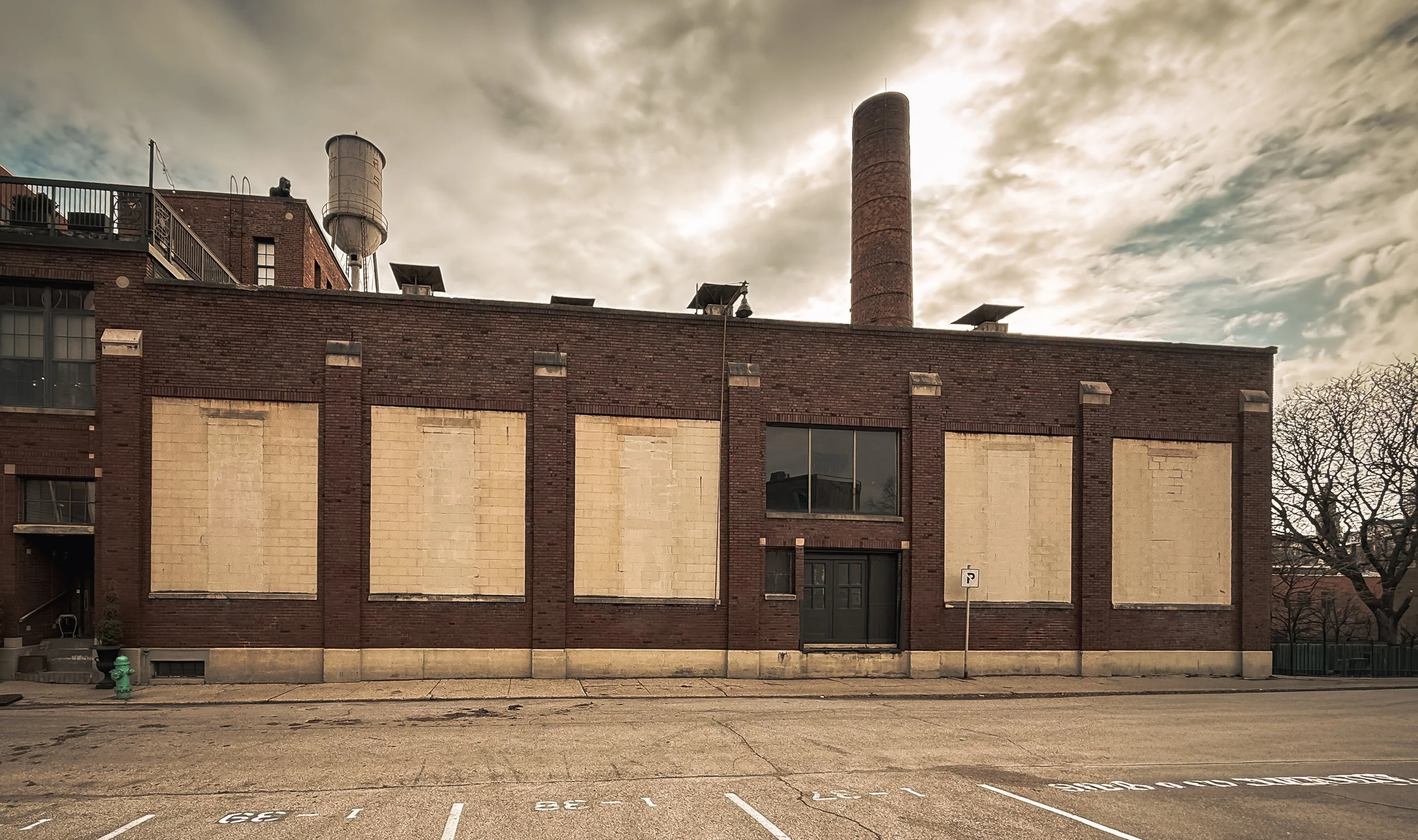
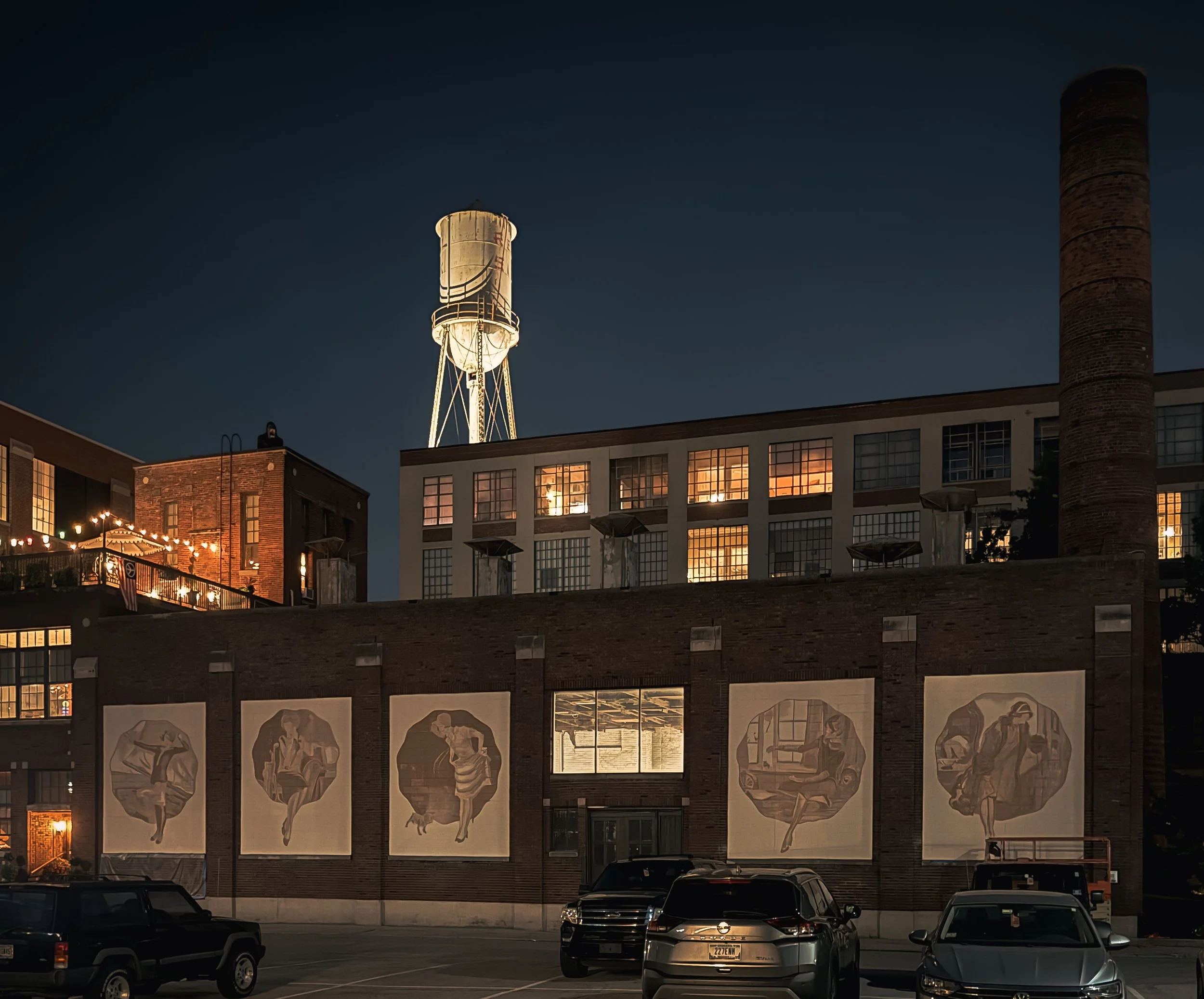
The building still declares its industrial origins. Its long brick elevations, repetitive bays, chimney, and rooftop water tower retain the scale and cadence of a working factory. Along the north wall, five former window openings had been filled with concrete block but remained framed by the original masonry
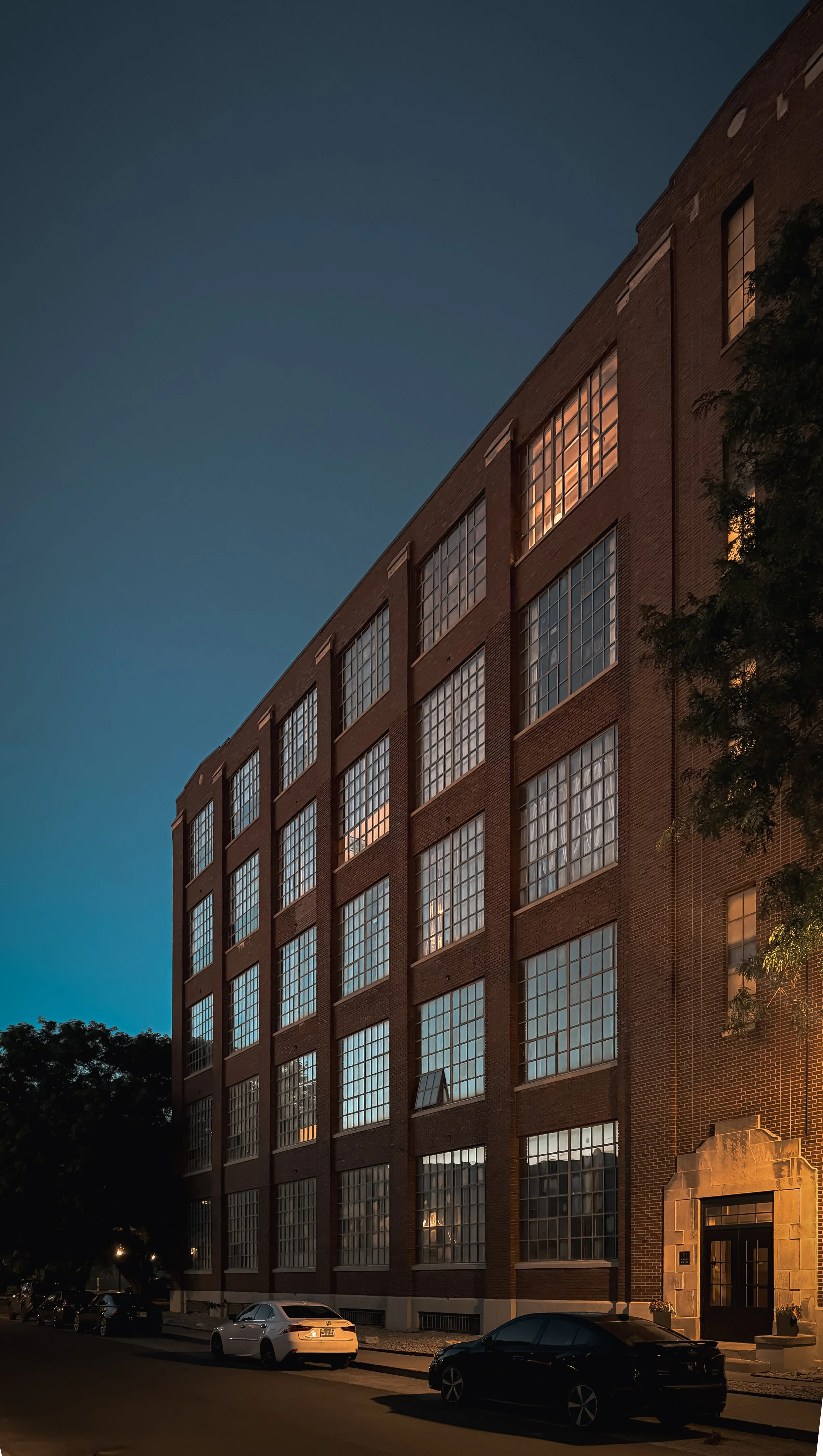
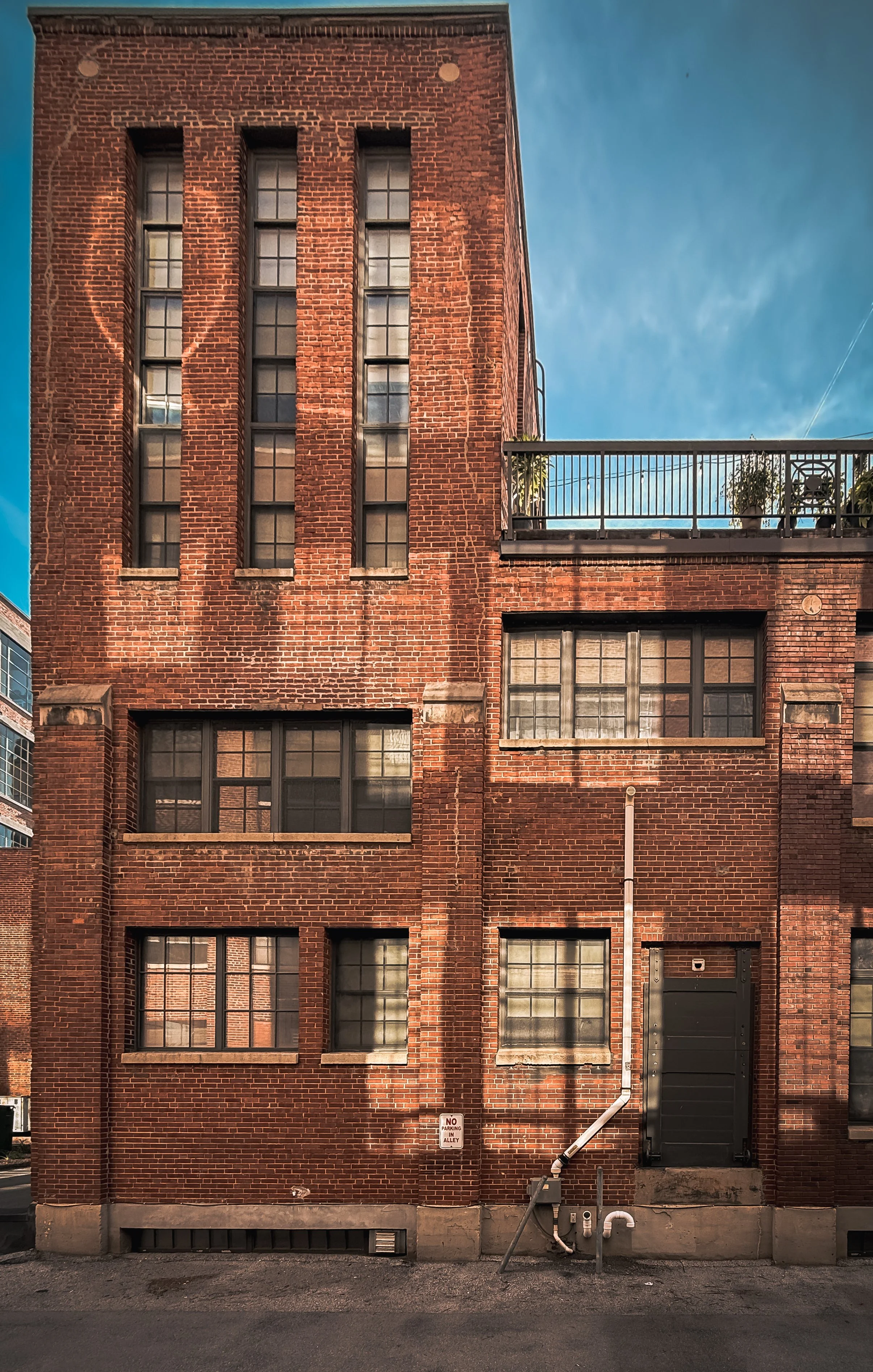
Those five openings became the site of this project. Rather than treating the façade as a blank surface, the commission works within an order the building already possessed: five equal fields, each approximately twelve by fourteen feet. The architecture determined the scale, spacing, and rhythm of the work before the first line was drawn.
The Advertising Art of Roy Best
The five murals are drawn from mid-1920s Real Silk advertisements illustrated by Roy Best. An American commercial artist, Best worked across magazine covers, book illustration, portraiture, and calendar art. These images precede the pin-up paintings for which he later became known, but much of that visual language is already present: idealized figures, carefully staged gestures, and an atmosphere of effortless sophistication.
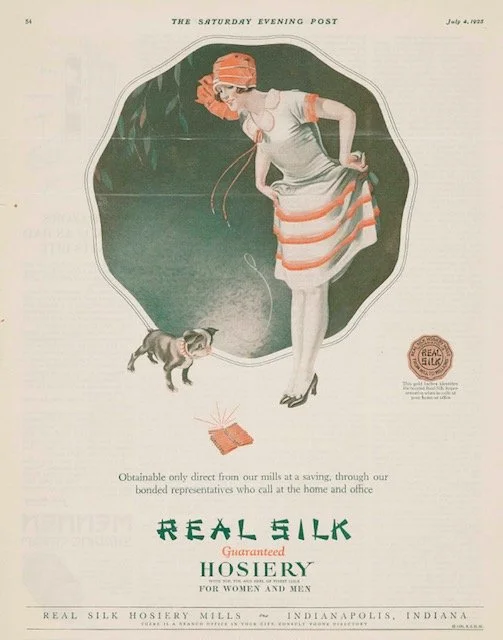
Stylistically, the illustrations combine naturalistic figure painting with the economy of commercial design. Softly modeled figures are contained within flat, irregular fields of color; interiors are reduced to a few descriptive objects; and restrained palettes allow posture and silhouette to carry each composition. The work possesses the elegance of the Art Deco period without relying on its harder geometry and remains painterly, intimate, and narrative.
The Painting Process
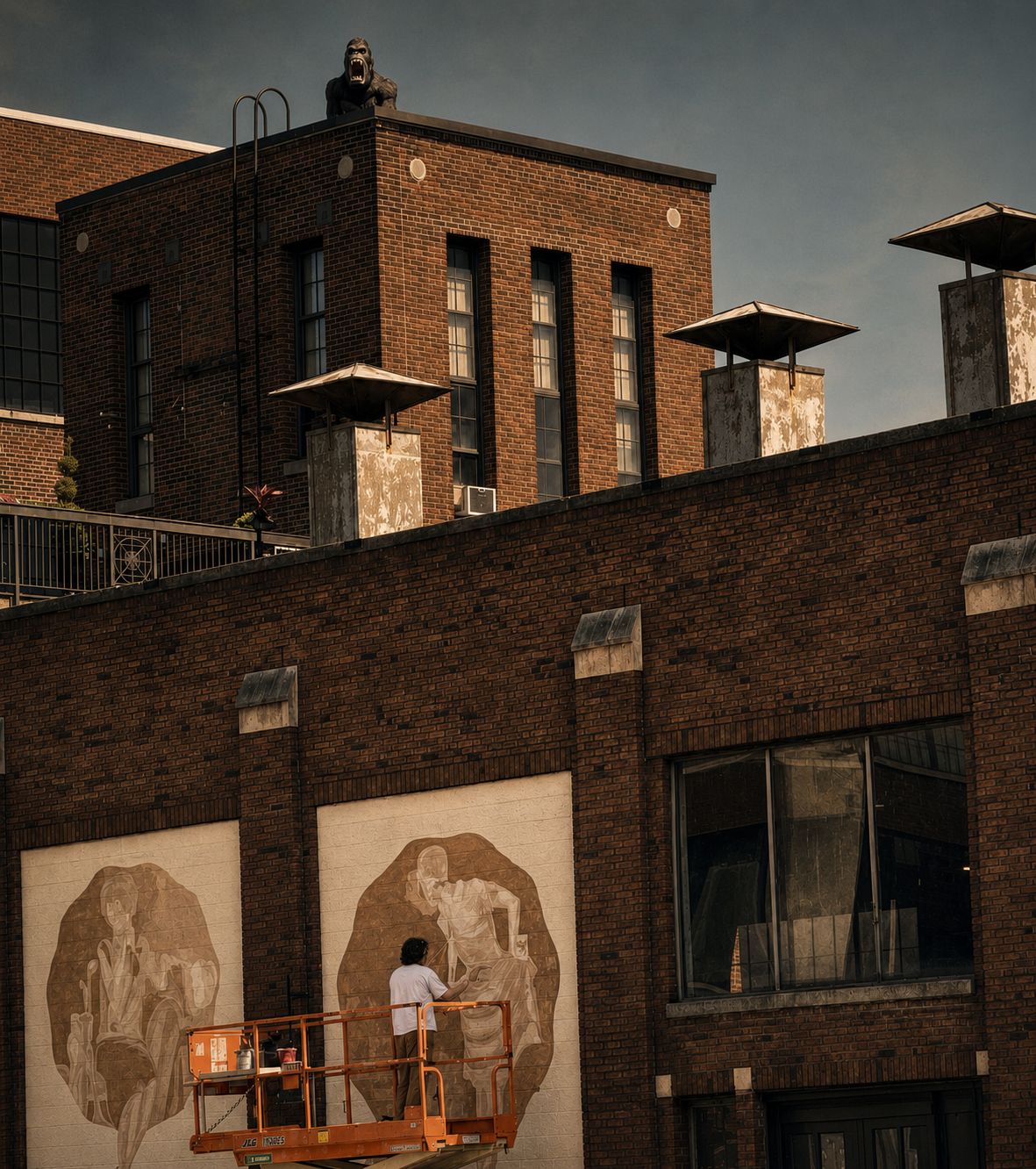
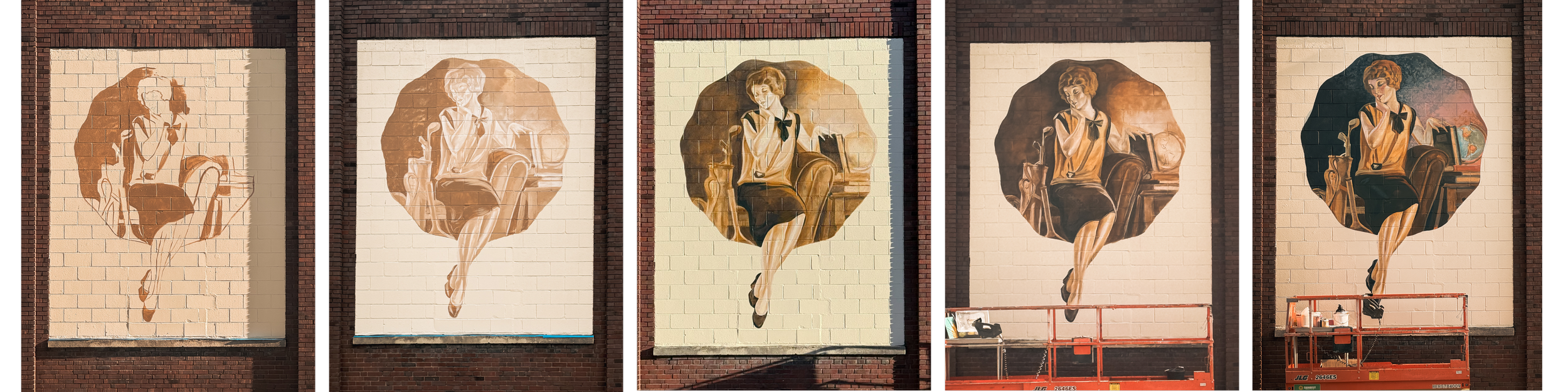
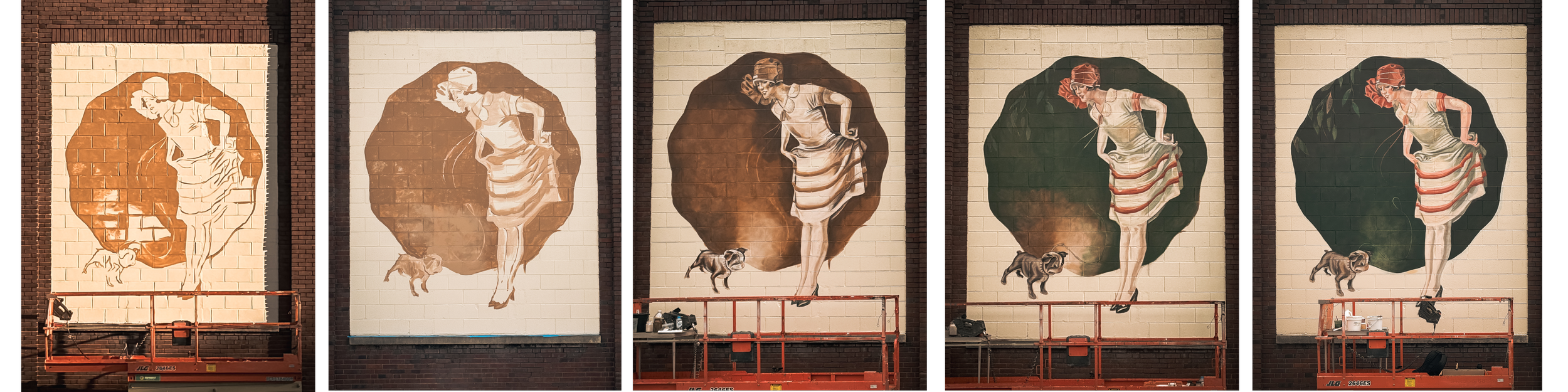
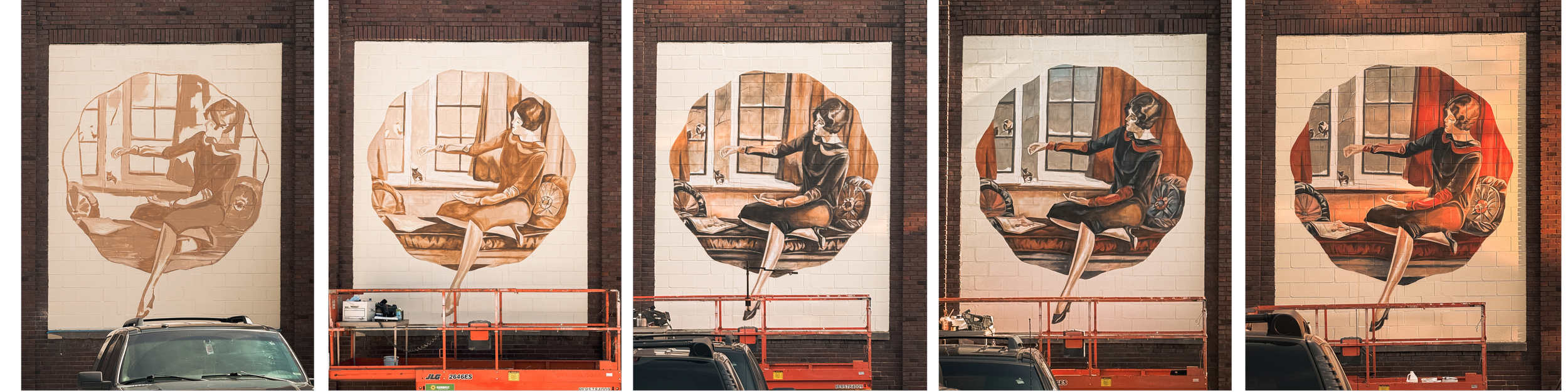
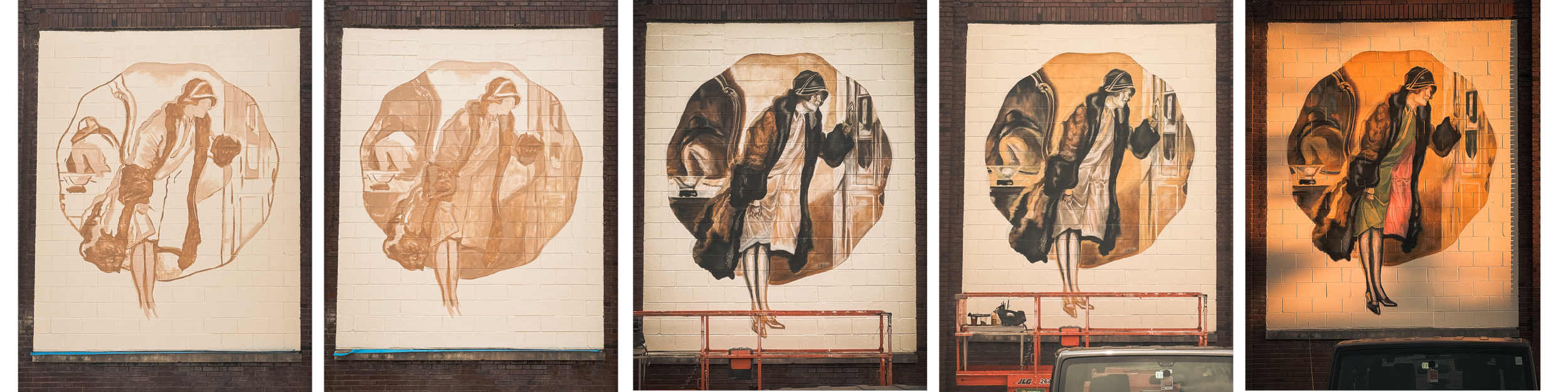
Painting began in sepia tones, establishing the drawing, values, and overall structure of the image.
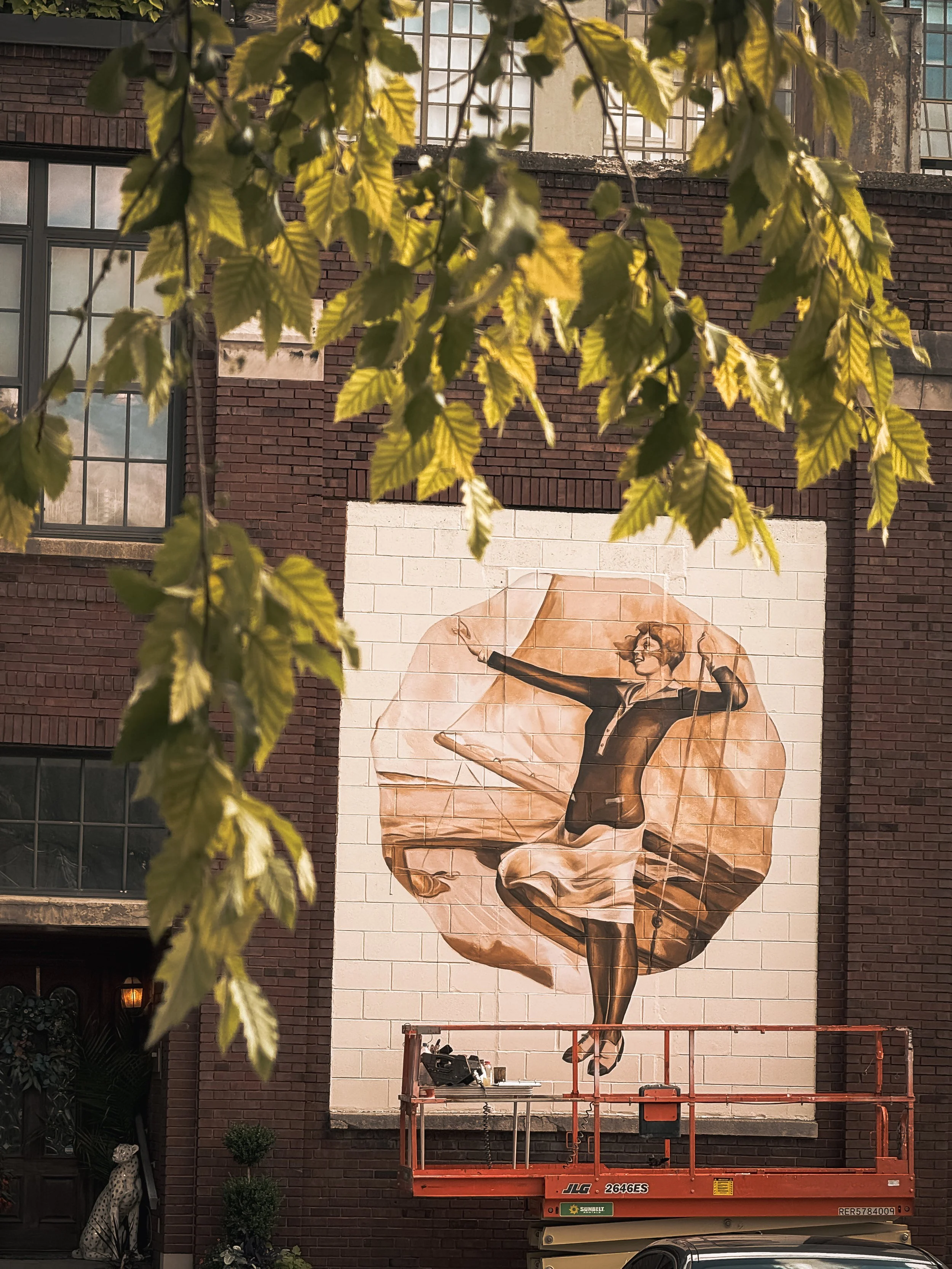
Blue tones were introduced next to deepen the shadows and create the darkest passages without relying on a flat black.
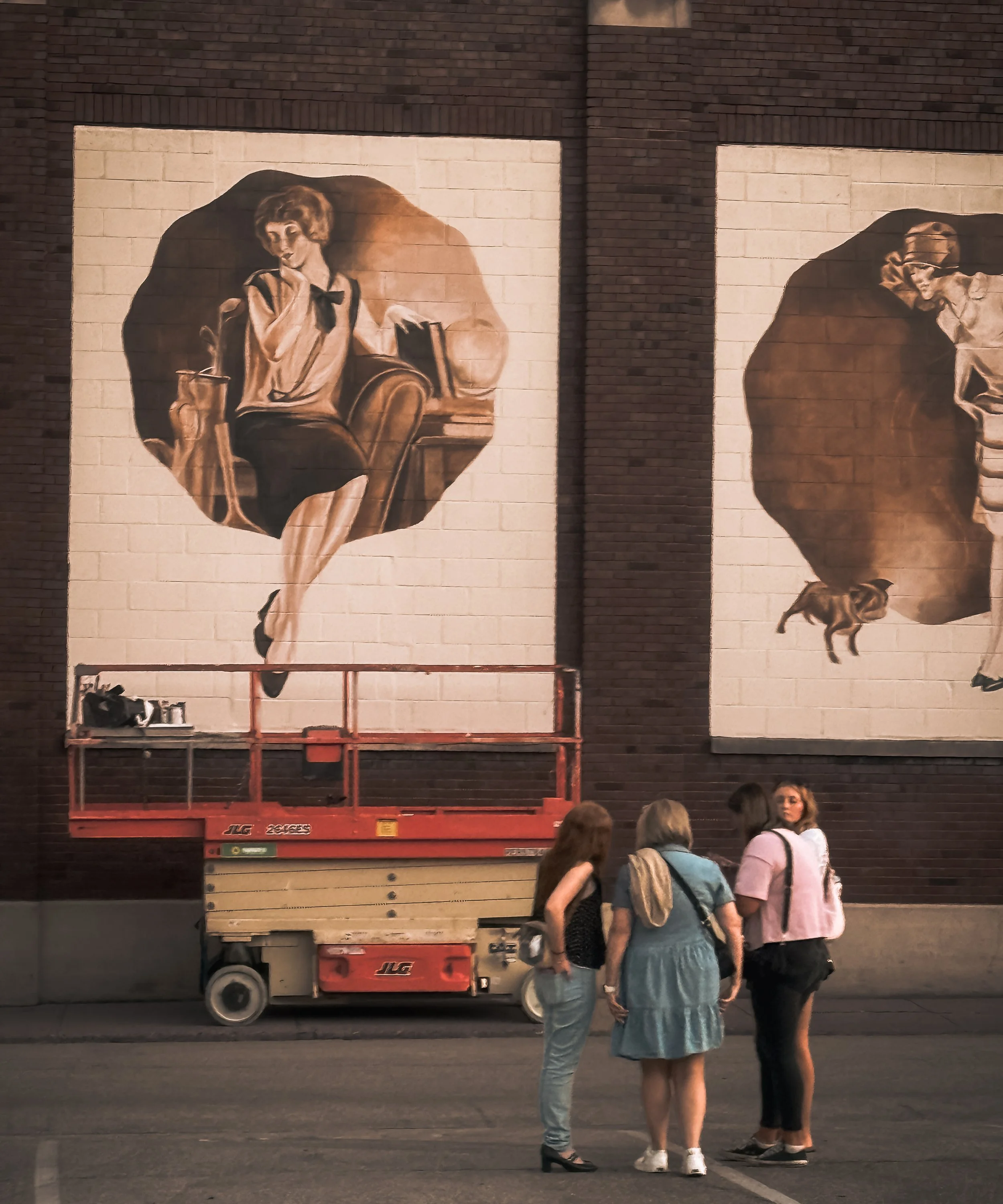
Color was then built gradually with layers of transparent pigment rather than blocked in opaquely. The sepia and blue foundations remained active beneath the later color, giving the finished paintings greater depth and tonal variation. Details were refined throughout the process as each layer clarified the figures, clothing, interiors, and surrounding forms.
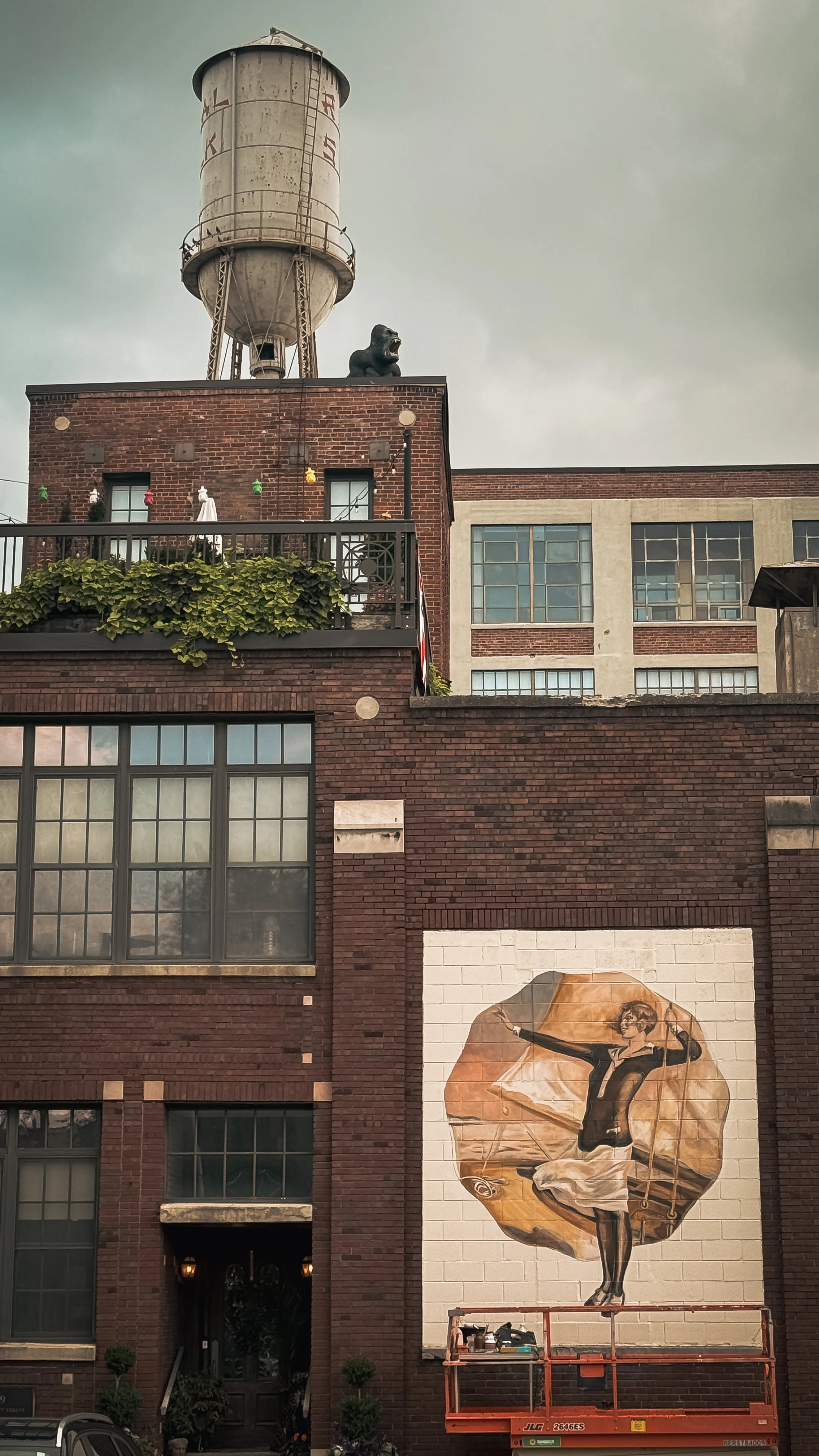
All five murals were developed from the same core palette. Individual colors shift from panel to panel, but their common foundation creates unity across the façade. A final matte protective finish preserves the subdued, antique character of the original illustrations.
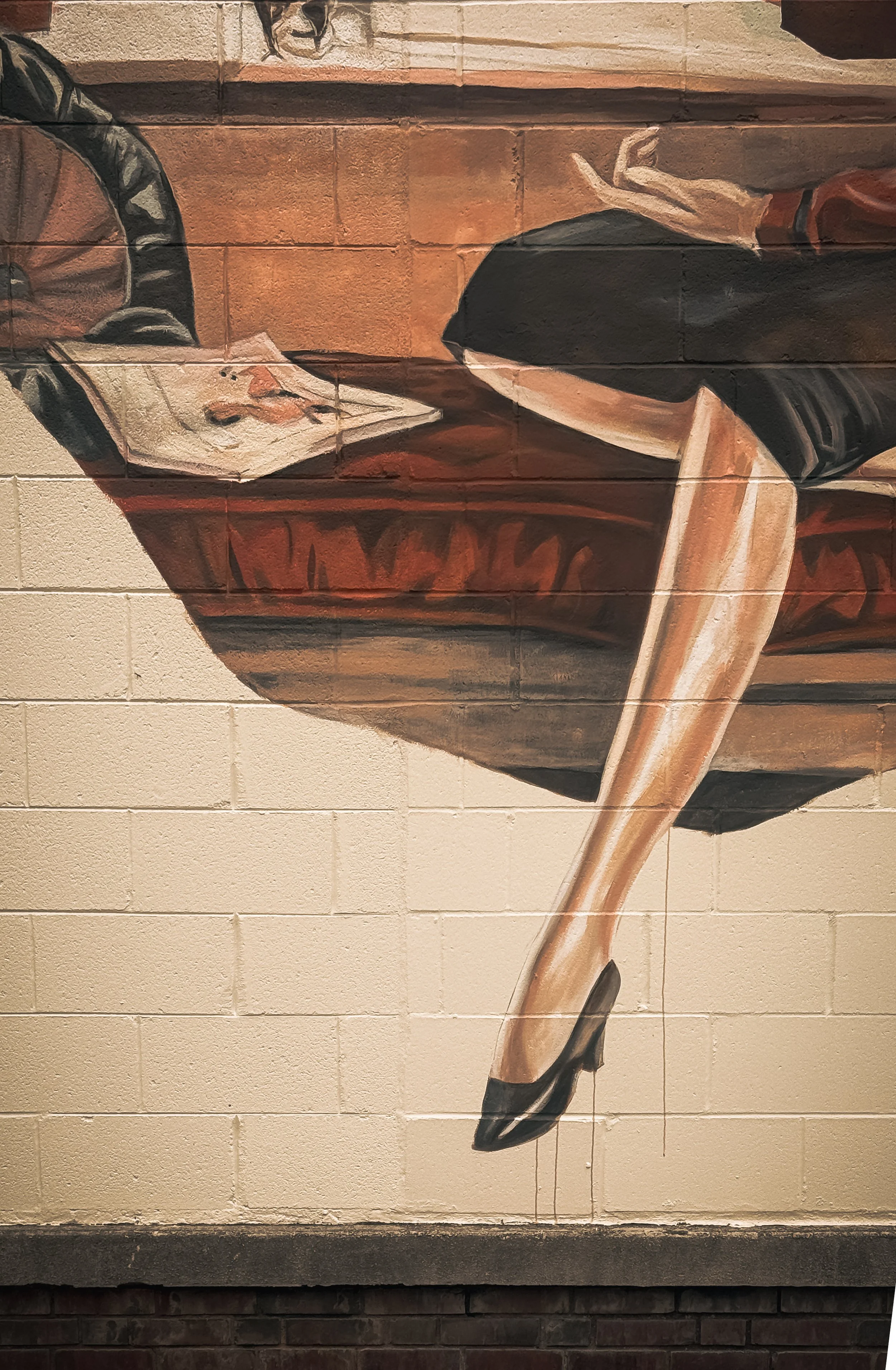
Five Murals, One Palette
Each sequence below follows a single panel from its first placement on the wall through successive layers of drawing, value, color, and detail.
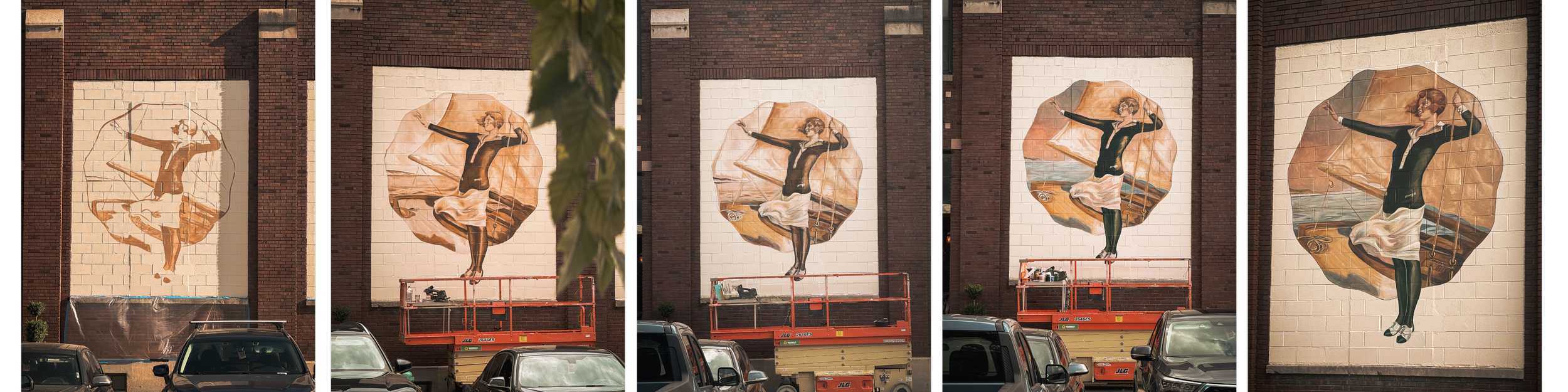
Pass 01
The first marks establish proportion, movement, and the relationship between the figure and its architectural frame.
Pass 02
Light and shadow begin to give the archival image a new physical presence.
Pass 03
The figure emerges through layered earth tones, carrying the warmth of the surrounding brick.
Pass 04
Interior details turn the painted opening into a scene beyond the wall.
Pass 05
The final composition completes the rhythm of figures across the façade.
History Returned to Public View
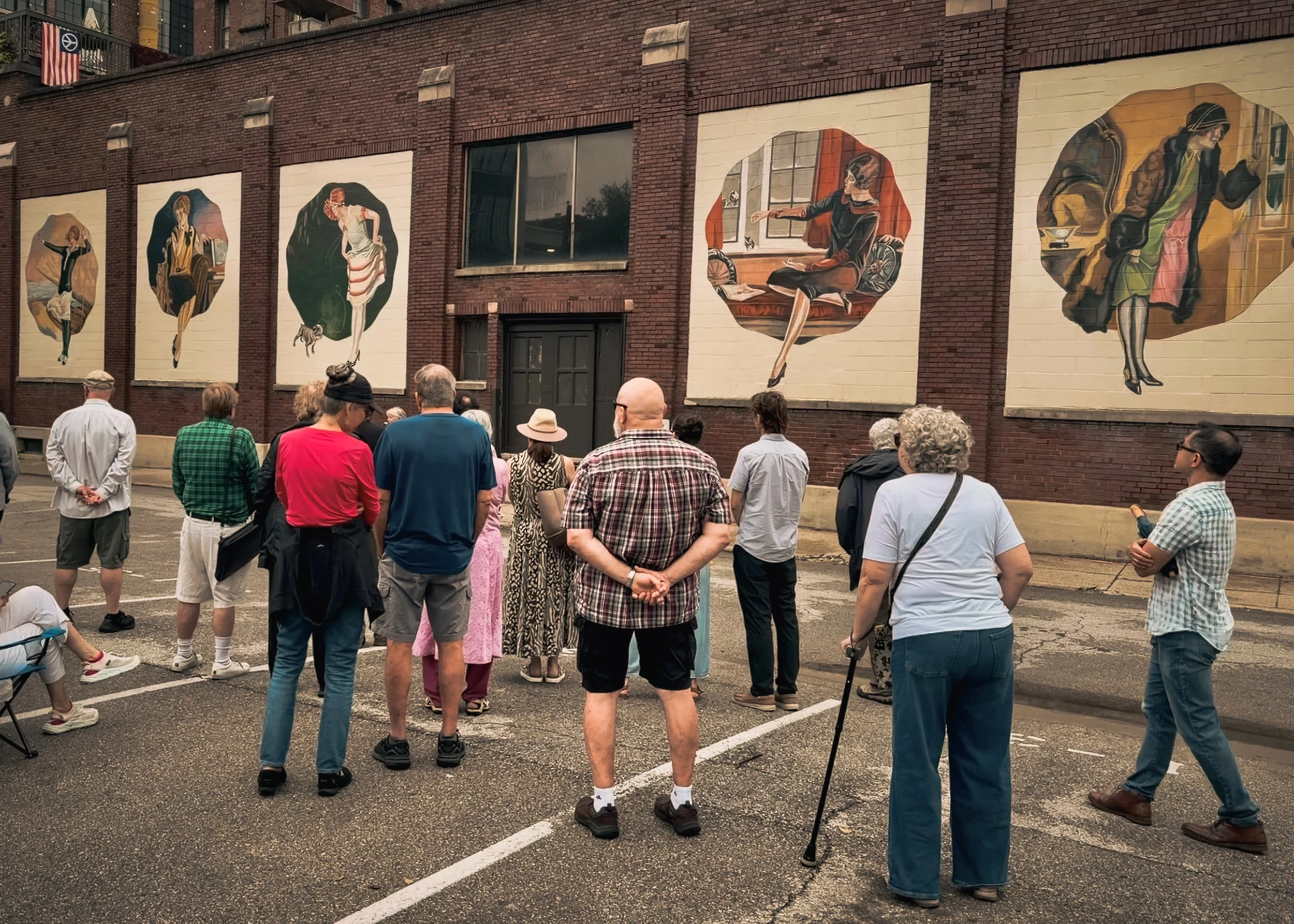
Together, the five paintings form a visual passage along the building. They do not attempt to recreate the factory exactly as it was. Instead, they allow pieces of its imagery, atmosphere, and human presence to re-enter contemporary life.
Seen from the street, the murals read as one architectural work. Viewed individually, each panel retains the intimacy of an illustration found in an old magazine or company archive.
Silk Lofts transforms the façade into a painted threshold between the building’s industrial past and its present life.
The factory no longer produces silk, but its walls continue to carry the story.